[ad_1]
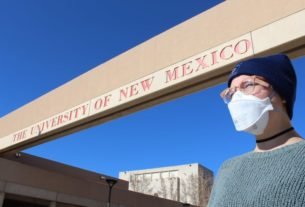
SPRINGFIELD – A Sangamon County judge is considering a motion to block Illinois schools from requiring people to wear face masks in classes and excluding students and staff from school buildings if they’ve had close contact with someone who has tested positive for COVID-19.
Circuit Judge Raylene Grischow heard oral arguments last week in a class action lawsuit against 145 school districts that was filed last year by Greenville attorney Thomas DeVore, who has unsuccessfully challenged the state’s COVID-19 mitigation measures in several other lawsuits.
In September, DeVore filed a motion for a temporary restraining order to permit students to continue in-person learning in school.
Attorney General Kwame Raoul’s office is defending the districts and the Illinois Education Association, along with the Illinois Federation of Teachers, has entered the case as intervenors on behalf of the teachers they represent.
The cases were originally filed individually in several Illinois counties but were later consolidated into Sangamon County Circuit Court.
At issue is whether school districts are violating state law by implementing orders from Gov. J.B. Pritzker and guidelines from the Illinois Department of Public Health and Illinois State Board of Education to impose certain mitigation measures in order to hold in-person instruction.
Those measures include requirements that all students, staff and visitors wear face coverings in school buildings, that students and staff be excluded from buildings if they test positive for COVID-19 or have been in close contact with someone else who has, and that school personnel be vaccinated or submit to weekly testing.
In the suit, DeVore argues that exclusions amount to a kind of “quarantine” and that under the Department of Public Health Act, schools cannot exclude students for public health concerns without their parents’ consent or a quarantine order from a public health department.
He also argues that schools have no legal authority to require vaccinations or the wearing of masks unless a public health department has issued a quarantine order.
PAID LEAVE IN SCHOOLS: Gov. Pritzker on Monday vetoed a bill that would have provided paid administrative leave for public school and university employees who miss work due to COVID-19-related issues and instead negotiated “compromise” legislation that would provide such leave to only those who are fully vaccinated.
“Vaccines are a vital tool in preventing the deadly effects of COVID-19, and those who take the steps to be fully vaccinated against this virus are doing their part to keep everyone safe,” Pritzker said in his veto message. “They deserve to be able to take the time they need to respond to the ongoing devastating impacts the COVID-19 pandemic continues to have on them and their families.”
House Bill 2778 passed the General Assembly during the fall veto session with wide bipartisan majorities, 53-1 in the Senate and 92-23 in the House.
It would have provided paid leave for any employee, including support staff and contractors, who missed work because they or someone in their household contracted COVID-19, if they or a family member was forced to stay home because they’d been in close contact with someone who had tested positive, or if they could not work because the school building was closed due to COVID-19.
To be eligible, however, the bill provided that the employee must either have been vaccinated or participated in the COVID-19 testing program provided by the district.
In September, Pritzker issued an executive order requiring school personnel to be vaccinated or undergo weekly testing. But his veto action Monday means that those who choose not to be vaccinated will not be eligible for paid administrative leave.
Since that bill passed, however, Pritzker said he has been negotiating with teachers unions and other groups to negotiate a different package with a stronger vaccine requirement.
Under that initiative, which still needs legislative approval, public school and university employees would receive paid administrative leave if they are fully vaccinated and they or their child is required to be excluded from school because of a positive COVID-19 test or have been in close contact with someone who has a confirmed case of COVID-19.
LAWMAKERS, GOVERNOR RETURNING TO CAPITOL: Illinois lawmakers will return to the Statehouse next week for their first in-person sessions since Jan. 4.
House Speaker Emanuel “Chris” Welch, D-Hillside, said Thursday, Jan. 27, that the recent decline in COVID-19 cases makes returning to the Capitol possible.
“Our goal is to be productive while also keeping everyone safe, so masking and social distancing policies will still be in place,” Welch said in a news release. “I want to encourage everyone to get their vaccine and booster, and take advantage of the SHIELD testing opportunity on the Capitol complex.”
A spokesman for Senate President Don Harmon, D-Oak Park, confirmed that the Senate will meet in-person next week as well.
Lawmakers are scheduled to meet Tuesday through Thursday next week, Feb. 1-3.
At a separate event in Chicago on Thursday, Gov. Pritzker said he plans to deliver his annual budget and State of the State address in person on Wednesday, Feb. 2.
“And I’m excited about that,” Pritzker told reporters at a news conference. “And I don’t want to give any previews. You’ll certainly hear about it in the 24 hours or so before the speech and then, of course, a few surprises in the speech. But we want to make sure and keep that for next week.”
Pritzker will deliver the speech from the House chamber. For safety reasons, Welch’s office said capacity limits will be in place and the gallery above the House floor will remain closed to the public.
DCFS: An emergency housing facility at the center of court case that led to the state’s Department of Children and Family Services director being held in contempt of court was the subject of 161 service calls to the Jefferson County Sheriff’s Department in 2021.
The 12-bed facility is the Southern Thirty Adolescent Center near Mount Vernon. It is run by Lutheran Children and Family Services, and has a $1.9 million contract to house children in DCFS custody aged 11 to 17.
The facility is designed as a temporary shelter, offering children access to educational, mental health and other appropriate services for up to 30 days.
But DCFS spokesman Bill McCaffrey said the average stay there is 107 days.
It’s the same facility where DCFS placed a 13-year-old boy, identified only as C.R.M. in court documents, in emergency custody for months despite a judge’s order to move him to a more appropriate setting. Earlier this month Cook County Judge Patrick T. Murphy cited DCFS Director Marc Smith for contempt for failing to relocate the boy to a therapeutic foster home.
Call logs from the Sheriff’s Department from Dec. 14, 2020, to Dec. 14, 2021, showed calls from STAC for fights, criminal damage to property, unspecified juvenile incidents and alarms. But the vast majority of calls, 97, involved runaways.
“The sheriff’s office uses significant resources responding to multiple calls for service each week at this facility,” Jefferson County Sheriff Jeff Bullard said.
PRISONER REVIEW BOARD: A bill was introduced in the Illinois House on Thursday, revamping the Prisoner Review Board, the board that decides whether those convicted of felonies will be freed and the conditions they will face if they are released from prison.
The goal of the new legislation, HB 5126, is to increase transparency, require a certain number of board members to have a law enforcement background and imprint victim rights on the board’s mission statement, according to House Republican Leader Jim Durkin, who sponsored the bill.
Durkin said the recent release of a cop killer, a murder-rapist and a child killer underscored the need for this legislation.
“These are just three specific cases, horrible cases, but they tell you everything you need to know,” Durkin said during a virtual news conference. “In each one of these cases a victim or their family publicly stated their strenuous opposition to the parole of each one of these.”
Some major points of the HB 5126 include:
• Requires five members of the 12-member Prisoner Review Board to have experience as police officers or a prosecutor.
• Broadcasts via live stream Prisoner Review Board hearings.
• Makes clemency recommendations to the governor’s office public.
• Requires a two-thirds vote for parole for those convicted of first-degree murder. Currently, the vote must be a simple majority voting for parole.
• Authorizes testimony from one representative of the person under parole consideration, one member of law enforcement from the county where the person was convicted, and one member of the victim’s family at the parole hearings.
• Makes the decision of the governor in parole cases subject to the Freedom of Information Act.
• Requires the Prisoner Review Board to notify victims in writing when an application for clemency has been made within a week of the filing of the application. If the victims fail to file a statement 30 days before the clemency hearing date, a second notice should be sent to the victim. A victim will receive a 45-day extension to provide a statement if they request it, and that time must elapse before the board can hold the hearing.
ETHICS REFORMS: Demanding what they call “common sense ethics reform,” Senate Republicans plan to take action in addressing unethical behavior by elected public officials.
Upon introducing the ethics reforms package, Senate Republicans called for the legislative inspector general position to be filled through an independent search committee. Republicans said Democrats need to end the “political games” and hire a legislative watchdog.
“It is not OK to have the legislative inspector general’s seat empty, and it is not OK for the majority party to play political games with an issue as important as legislative ethics, and it is not OK for legislators to think they can police themselves,” Sen. Don DeWitte, R-St. Charles, said during a virtual news conference Thursday.
The position has been vacant since LIG Carol Pope left the position on Jan. 6. Since exiting, a 45-day countdown started to find an interim LIG but the commission is currently at an impasse. If the position is still vacant in six months, the Illinois auditor general will choose the next LIG.
Republicans also filed legislation to increase LIG’s power that would allow the person in that position the ability to subpoena lawmakers and make the Ethics Commission meetings open to the public.
To address the shortcomings Republicans felt were not properly addressed in the last reform bill, Sen. Jil Tracy, R-Quincy, introduced Senate Bill 3636, which takes “meaningful action” to address corruption within the state government. The legislation would build on SB 539, which was passed in 2021.
Senate Bill 3636 would prevent spouses and other close family living with a General Assembly member from engaging in lobbying if they accept compensation, and prevent legislators from negotiating for employment with lobbying entities while holding public office.
Under last year’s bill, a six-month revolving door provision banned legislators from lobbying until six months after leaving office. The new provision in SB 3636 would extend the ban to 12 months.
The bill would also allow the attorney general to expand the authority of a statewide grand jury to investigate, indict, and prosecute public corruption cases, and give state’s attorneys power to investigate corruption of public officials.
SUPREME COURT CASE: The Illinois Supreme Court is being asked to decide whether public officials who are under investigation or charged with crimes may use their campaign funds to pay for their legal defense.
The court heard oral arguments last week in a case involving a former Chicago city alderman, Daniel Solis, then chairman of the City Council’s Zoning Committee, who was being investigated by the FBI for allegedly taking campaign donations from developers in exchange for official action.
Solis did not run for re-election in 2019 and was succeeded by Byron Sigcho-Lopez, who filed a complaint over the matter with the Illinois State Board of Elections.
On May 21, 2019, the day after Sigcho-Lopez was sworn into office, the 25th Ward Regular Democratic Organization, which Solis chaired, used $220,000 to pay the law firm Foley & Lardner, LLP, for defending him. The purpose of the payment was first reported by local media.
Solis was not prosecuted in the case. Instead, he entered a deferred prosecution agreement with the Justice Department in exchange for agreeing to wear a wire and aid in the investigation of another Chicago city alderman, Ed Burke, who is the husband of Supreme Court Chief Justice Anne Burke.
Anne Burke has recused herself from the case, as has Justice Mary Jane Theis. Neither gave an official reason for their recusal.
That leaves only five justices left to decide the case, but the Illinois Constitution still requires four justices to agree on a decision.
ISBE dismissed the complaint, saying the Illinois Campaign Disclosure Act prohibits the use of campaign funds to satisfy personal debts, but it specifically permits the use of campaign funds “to defray the customary and reasonable expenses of an officeholder in connection with the performance of governmental and public service functions.”
The question before the court is whether the cost of a criminal defense lawyer is a personal expense or an expense directly related to Solis’ governmental or public service functions.
“Are we at that point in Illinois where we’re going to say that that’s an ordinary expense of holding public office?” Justice Michael Burke asked during oral arguments. Michael Burke is not related to Anne or Ed Burke.
The Illinois statute itself does not define the difference between personal and official expenses. But Adolfo Mondragon, the attorney for Sigcho-Lopez, argued that criminal defense costs cannot be considered part of an elected official’s governmental functions.
Michael Dorf, attorney for the 25th Ward committee, however, argued that public corruption investigations are, by definition, directly tied to an officeholder’s official duties, so attorney fees should be considered an allowable use.
HOMEOWNERS ASSISTANCE: Beginning this spring, the Illinois Housing Development Authority will start accepting applications for homeowners experiencing financial hardship.
The Illinois Emergency Homeowner Assistance Fund overseen by IHDA is a federally-funded program that is dedicated to assist Illinois homeowners that have struggled to pay their mortgage due to the COVID-19 pandemic.
“I know we’ve been waiting for these funds for a while and it’s really been a holdup from the U.S. Treasury (of) being able to get this money out the door,” House Housing Committee Chair Delia Ramirez, D-Chicago, said during a hearing Wednesday.
Funded through the American Rescue Plan Act that passed Congress in March 2021, $387 million will be available through the emergency assistance fund for homeowners.
The ARPA funds provided assistance for rent and utilities, as well as $387 million for the soon-to-launch mortgage assistance program.
Homeowners will be able to apply for a grant of up to $30,000 that will eliminate or reduce arrearages associated with homeownership.
Funds can also be used to prevent mortgage delinquencies and defaults, foreclosures, loss of utilities or home energy services and displacement of homeowners experiencing financial hardship after Jan. 21, 2020.
Homeowners must contact their mortgage servicer or a housing counseling agency to ask for help and then, depending on the outcome, can apply for assistance through IHDA.
ABORTION ACCESS: Hoping to make abortion care more accessible, a facility near St. Louis is set to be the “first of its kind” in providing financial assistance for travel-related costs.
A Regional Logistics Center was opened Friday, Jan. 21, in a Planned Parenthood clinic in Fairview Heights. Using private funds, the center will pay for travel and lodging arrangements and connect patients to resources and support organizations in all 50 states.
“Together, we are breaking down the silos anti-abortion politicians have created, and proving that … with innovation and determination … we can secure a future with abortion access,” Yamelsie Rodriguez, president of St. Louis Planned Parenthood, said during an opening event Friday.
Rodriguez said the RLC will be operated by Planned Parenthood and the Granite City-based Hope Clinic for Women in response to more restrictive abortion laws in other states and to the lack of access for women in rural areas.
Planned Parenthood and Hope Clinic have been planning for the center since 2019, when Gov. Pritzker signed the Reproductive Health Act which guarantees that reproductive health, including abortion, is a fundamental right in Illinois.
“The idea that we’re protecting those rights with the Reproductive Health Act in the state is vital,” Pritzker said.
Since a soft opening in December, the center has provided 138 rides and flights and housed dozens of women in need of overnight stays.
Rodriguez is projecting an additional 14,000 women from conservative states are likely to travel to the region for abortion care if Roe v. Wade, the 1973 U.S. Supreme Court case that legalized abortion nationwide, is overturned.
Gov. J.B. Pritzker announces the Illinois Works Pre-Apprenticeship Program.
LAW ENFORCEMENT: Police chiefs and sheriffs told a panel of state lawmakers Friday, Jan. 21, that they need more resources and support from the public and the General Assembly to combat a rising rate of violent crime in Illinois. Some said they don’t feel they are getting that now, especially in light of recently-enacted criminal justice reforms.
“There are members in policing that believe that the community should have nothing to say about what we do in our profession,” Hazel Crest Police Chief Mitchell Davis said. “Conversely, there are members in the community that want nothing to do with police officers of any kind. All sides are entitled to feel the way that they feel. But until we are able to work together in spite of our differences, we will never fully reach our potential in equitably addressing the concerns of public safety and violence in all communities.”
Davis spoke during a hearing of the House Public Safety and Violence Prevention Task Force, a group that House Speaker Emanuel “Chris” Welch, D-Hillside, formed in September “to develop a collaborative approach to the violence crisis.”
Welch formed the task force as Chicago and many other cities were experiencing their most violent year in decades. Chicago alone had some 800 murders during the year, the most in the past quarter century.
The panel is co-chaired by Reps. LaShawn K. Ford and Frances Ann Hurley, both Chicago Democrats.
The increase in violent crime has come just after the General Assembly enacted a sweeping criminal justice reform package known as the Safety, Accountability, Fairness and Equity-Today, or SAFE-T Act that included, among other things, the scheduled elimination of cash bail in Illinois beginning next year.
When that law takes effect Jan. 1, 2023, courts will still be able to detain people they believe pose a risk to public safety, but those who are not detained will be released on conditions other than posting bond.
Lemont Police Chief Marc Maton said public criticism of policing in general has led to officers being less willing to take aggressive actions to stop crime.
“Our cops aren’t laying down,” he said. “They see the media, proposed legislation and community commentary, and they think that this is the role that’s expected of them, and that the community wants a less aggressive approach to policing and is asking for this model of policing.”
Springfield Police Chief Kenny Winslow said his department has been losing officers who get trained in Illinois but later move to work in other states that they perceive to be more supportive of law enforcement.
Photos: Chicago Bears coaching candidate Matt Eberflus
Matt Eberflus – September 2021

Indianapolis Colts defensive coordinator Matt Eberflus on the sidelines during an NFL football game, Sunday, Sept. 12, 2021, in Indianapolis.
Matt Eberflus – November 2021

Defensive coordinator Matt Eberflus of the Indianapolis Colts coaches against the Tampa Bay Buccaneers in an NFL football game, Sunday, Nov. 28, 2021, in Indianapolis, IN. The Buccaneers defeated the Colts 38-31.
Matt Eberflus – June 2014

Dallas Cowboys linebackers coach Matt Eberflus instructs Bruce Carter and others as they run drills during an NFL football organized team activity, Monday, June 2, 2014, in Irving, Texas.
Matt Eberflus – December 2007

Missouri defensive coordinator Matt Eberflus speaks during a news conference, Saturday, Dec. 29, 2007, in Irving, Texas.
Matt Eberflus – February 2013

Dallas Cowboys linebackers coach Matt Eberflus smiles as he talks with reporters during an NFL news conference at the Cowboys training facility Thursday, Feb. 14, 2013, in Irving, Texas.
Matt Eberflu – March 2015

Gil Brandt, left, talks with Dallas Cowboys linebackers coach Matt Eberflus, right, as the two watch players work out for scouts at TCU NFL football Pro Day Friday, March 27, 2015, in Fort Worth, Texas.
Matt Eberflus – July 2014

Dallas Cowboys Linebacker coach Matt Eberflus, left, talks with Dallas Cowboys linebacker Rolando McClain during an NFL training camp, Saturday, July 26, 2014, in Oxnard, Calif.
Matt Eberflus – September 2015

Dallas Cowboys tight end Jason Witten (82) is greeted by Dallas Cowboys linebackers coach Matt Eberflus after Dallas defeated the New York Giants in their NFL football game in Arlington, Texas on September 13, 2015.
Matt Eberflus – November 2015

Dallas Cowboys linebackers coach Matt Eberflus, right, talks to players during warmups before an NFL football game against the Tampa Bay Buccaneers in Tampa, Fla., Sunday, Nov. 15, 2015.
Matt Eberflus – June 2017

This is a photo of Matt Eberflus of the Dallas Cowboys NFL football team. This image reflects the Dallas Cowboys active roster as of Monday, June 19, 2017.
Matt Eberflus – August 2018

In this Aug. 6, 2018, file photo, Indianapolis Colts defensive coordinator Matt Eberflus talks with linebacker Darius Leonard (53) during practice at the NFL team’s football training camp, in Westfield, Ind.
Matt Eberflus – December 2019

Indianapolis Colts defensive coordinator Matt Eberflus watches from the sideline during the first half of an NFL football game against the Jacksonville Jaguars Sunday, Dec. 29, 2019, in Jacksonville, Fla.
Matt Eberflus – March 2021

This is a 2021 photo of Matt Eberflus of the Indianapolis Colts NFL football team. This image reflects the Indianapolis Colts active roster as of Thursday, March 4, 2021 when this image was taken.
Matt Eberflus – September 2021

Indianapolis Colts defensive coordinator Matt Eberflus on the sidelines during an NFL football game against the Los Angeles Rams, Sunday, Sept. 19, 2021, in Indianapolis.
Matt Eberflus – November 2021

Indianapolis Colts defensive coordinator Matt Eberflus on the sidelines during an NFL football game against the Jacksonville Jaguars, Sunday, Nov. 14, 2021, in Indianapolis.
[ad_2]
Source link