[ad_1]
The state health department reported that in December people who were not fully vaccinated died from COVID-19 at a rate 14 times higher than among fully vaccinated Wisconsinites, and were hospitalized at a rate 10 times higher. Statewide, 59.2% of Wisconsinites were fully vaccinated as of Jan. 27.
Omicron leaves its mark
While COVID-19 vaccines are solidly effective in reducing the risk of hospitalization and death, the omicron variant has more readily evaded prior immunity gained from both natural infection and vaccination than previous variants.
In December, after omicron began spreading in the state, fully vaccinated Wisconsinites were diagnosed with COVID-19 at lower rates than those who weren’t fully vaccinated, but the gulf in disease rates was markedly narrower than differences in hospitalization and death rates. (Despite this shift, data published by the Centers for Disease Control and Prevention indicate that booster doses are highly effective in further lowering the risk of infection along with severe disease and death.)
Combined with omicron’s exceptional transmissibility, its ability to evade prior immunity drove its rapid spread, with a huge spike in demand for testing following in turn. The skyrocketing demand has pushed a growing reliance on antigen tests, which offer speed and convenience compared to PCR testing, even if their results are not as reliable. In response, the federal government has sought to make antigen tests more accessible by offering four free tests per household every month and mandating health insurance providers cover the cost of up to eight tests a month.
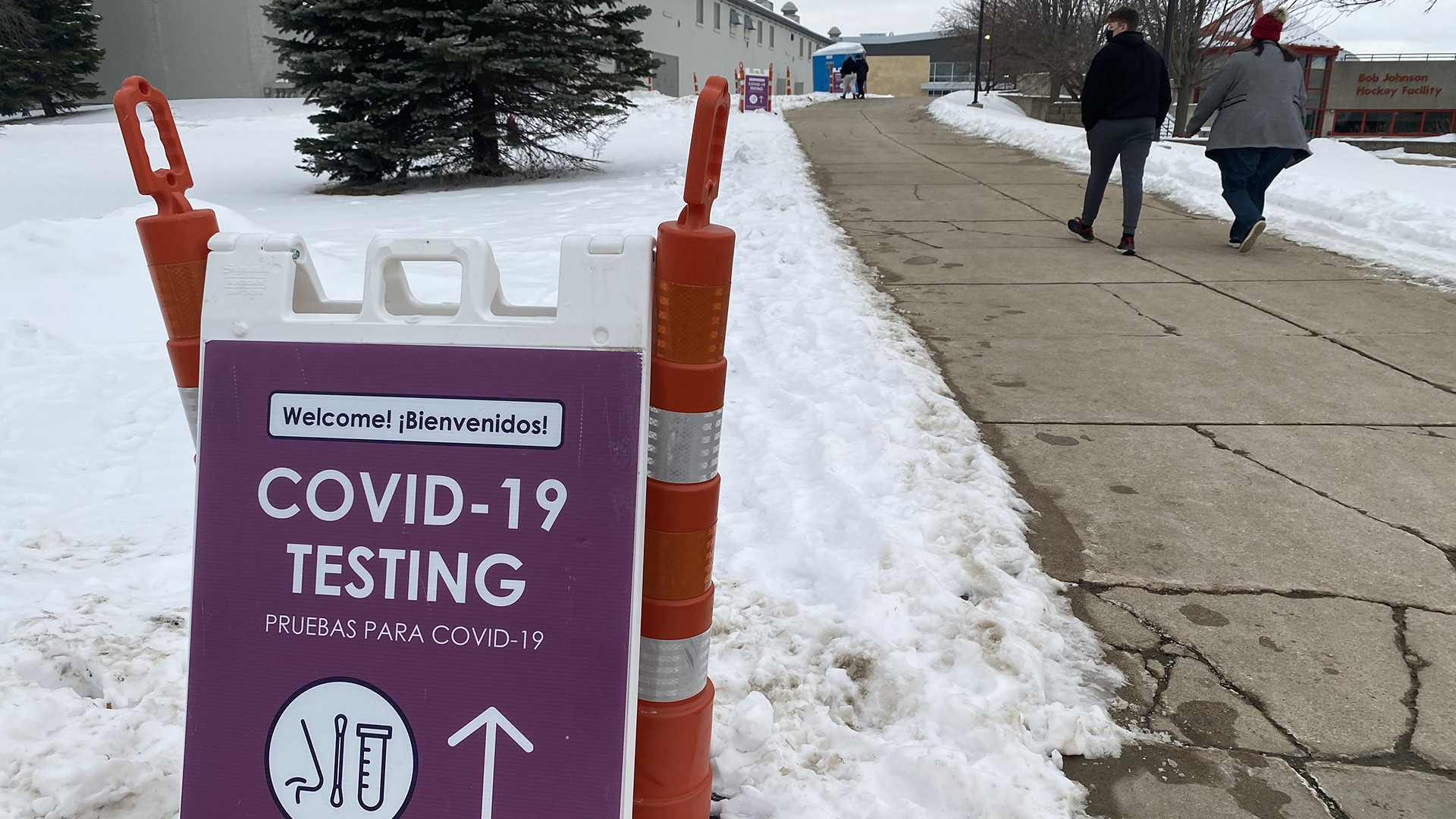
People seeking to be tested for COVID-19 walk toward an entrance to the Alliant Energy Center in Madison, a test center operated by Public Health Madison Dane County. (Credit: Will Cushman / PBS Wisconsin)
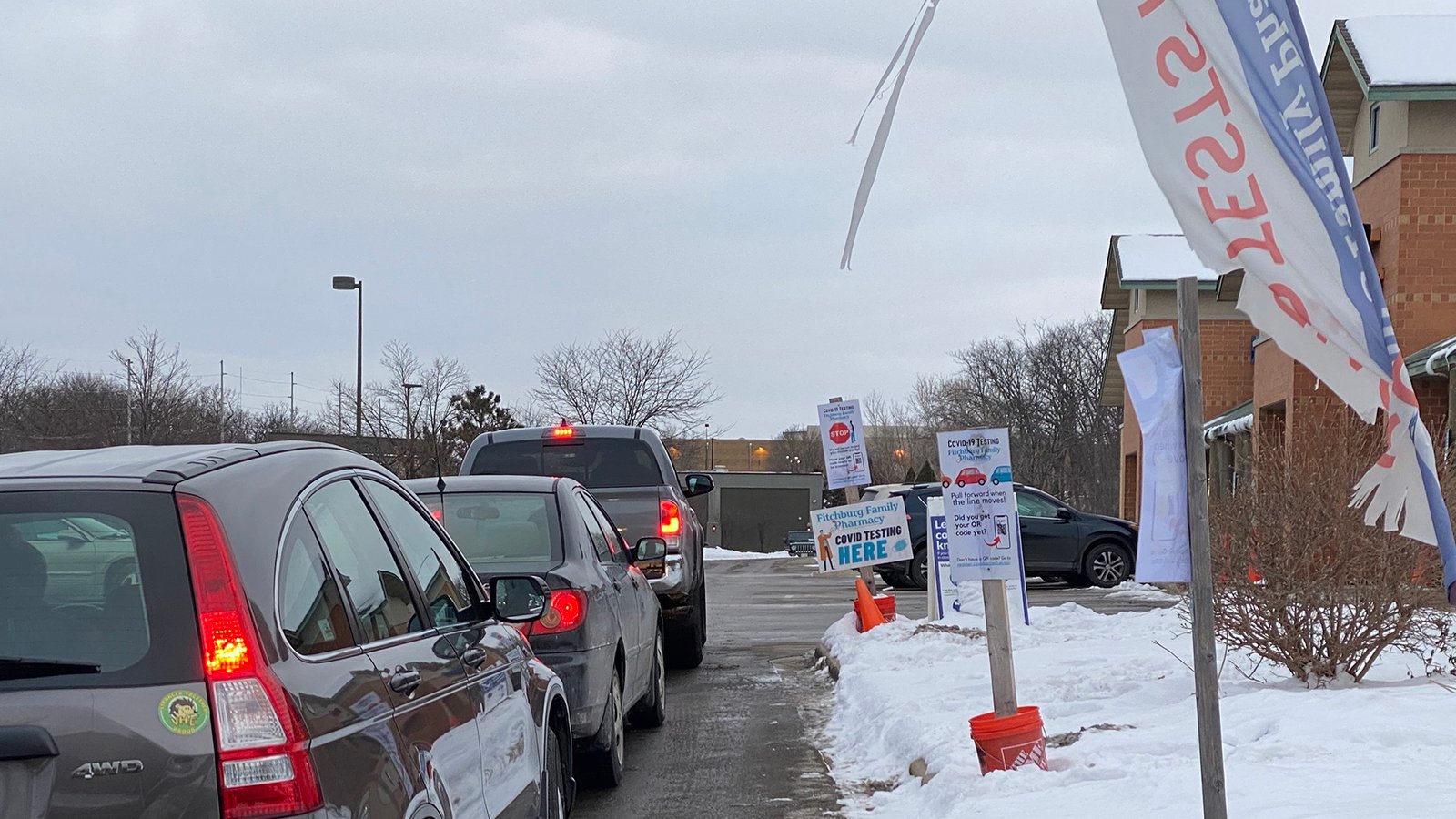
Demand for testing has also led to a proliferation of sites advertising both rapid antigen and PCR testing in communities around Wisconsin. The operators of some of these sites have drawn complaints about their practices, and on Jan. 26 the state health department and Wisconsin Department of Agriculture, Trade and Consumer Protection released a joint advisory providing Wisconsinites with information about how to determine the legitimacy of a testing provider and outlining the process for filing complaints.
Following infection, omicron can manifest in subtly different symptoms than previous strains, but the variant is more pronounced in distinct effects of some available treatments. Most notably, on Jan. 24 the U.S. Food and Drug Administration limited authorization for two common monoclonal antibody treatments because they were found to be ineffective against omicron. The FDA said the treatments can still be used for people likely to have been infected with another variant. With more than 98% of specimens analyzed in Wisconsin during the second week of January identified as omicron, the FDA’s decision has effectively halted those treatments.
On the other hand, Pfizer announced a handful of lab studies suggesting its anti-covid pill Paxlovid remains effective against omicron, while the drug-maker Merck expects its covid therapeutic molnupiravir to also remain effective against the variant.
Meanwhile, the omicron variant remains in wide circulation across Wisconsin even as cases fall. As of Jan. 27, all 72 counties in the state were continuing to see “critically high” levels of transmission, according to the state health department, though case activity was falling in a majority.
Even as a Mayo Clinic model forecasts that the steep decline in cases should hold steady, it’s no sure bet thanks to another unique aspect of the omicron wave. A subvariant of omicron that researchers initially expected to be outcompeted by the one that first swept the globe has itself started spreading in some parts of the world, most notably in Denmark. The subvariant, labeled BA.2, is fairly closely related to the initial omicron variant, and while scientists are still working to understand it, one potential consequence of its spread might be to lengthen the omicron wave.
[ad_2]
Source link