[ad_1]
As the threat of the more transmissible Omicron variant of Covid-19 emerging in the community looms, several retailers told Stuff they are seeing a spike in demand for P2 masks.
A spokesperson for safety retailer Cleanline Tasman said: “Supply has been massively impacted with several major suppliers selling out in hours. I would expect the price of these masks to jump significantly very soon.”
They said to meet high demand, “many companies will have to airfreight more stock in, which heavily impacts the price”.
But which mask should you choose? Here we run through the various types available and what the differences are.
READ MORE:
* Covid-19: Which face masks are available in NZ and which are the most effective?
* Face mask type used by DHBs not up to scratch
* Coronavirus: Is it fair to charge $63 for 20 disposable masks?
KN95 and N95 masks
Markus Winkler/Unsplash
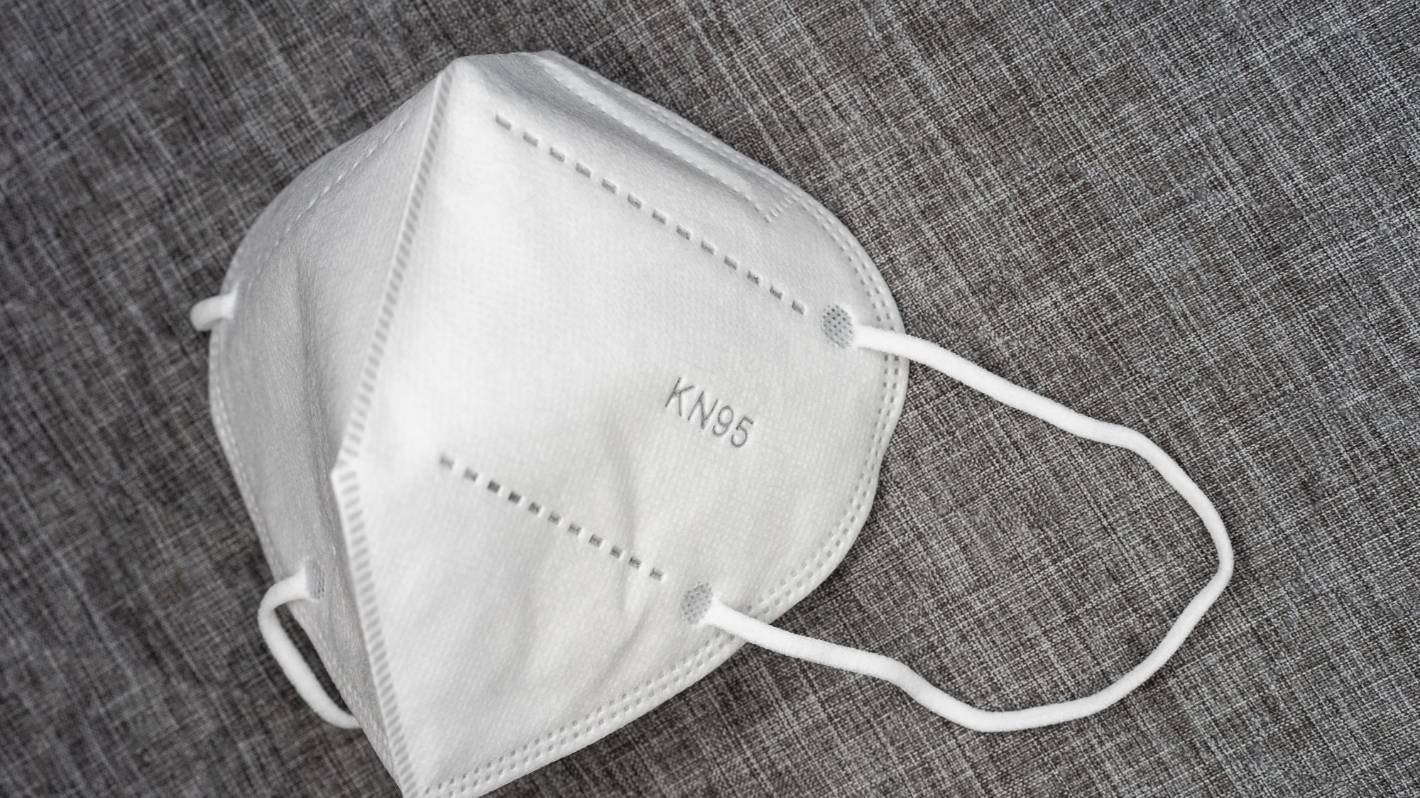
KN95 masks block 95 per cent of harmful particles.
KN95
KN95 respirator masks are made from five layers of filters, and use a mechanical filter to block up to 95 per cent of harmful particles – hence “95” in its name.
KN95 masks meet the Chinese standard for respiratory protection and are fit tested on people.
Several retailers and PPE suppliers Stuff spoke to said they either do not stock these standard of masks or face supply shortages and are now replacing these masks with European standard FFP2 or New Zealand standard P2 masks.
These masks are currently out of stock at leading suppliers including: Mitre 10, The Warehouse and St John according to the St John first aid products website.
St John has been approached for comment.
N95
N95s can also block up to 95 per cent of particles.
N95 masks are manufactured to meet standards set by NIOSH, a US-based agency that tests mask designs. These masks are not required to be fit tested on real people.
A spokesperson for Mitre 10 said this was the most popular mask among buyers – hence why this mask is also currently out of stock.
Similar to the KN95, due to supply shortages, retailers are promoting the P2 masks instead, as they are very similar to the N95’s.
Leading retailers such as Mitre 10 and The warehouse currently do not stock these masks. For buyers hoping to get their hands on an N95, Leedsafe is currently selling a box of 20 for $52.
Penny Murray/Stuff
P2 mask made by 3M has a filtration level of 94.5 per cent.
P2
The New Zealand standard P2 masks – which have an estimated filtration level of 94.5 per cent – are currently in hot demand.
P2 masks meet standards used in Australia and New Zealand, which place higher importance on breathability than those set in the US and China. They are fit tested on people.
A spokesperson at the main warehouse of PPE safety supplier Direct Office Products Depot said, although they have some in stock, they are “not confident it’ll last”.
These masks are currently in stock at leading retailers such as Mitre 10, Bunnings and The Warehouse.
Buyers can expect to pay between $30 and $60 for a box of 20 and $10 to $15 for individual masks.
A spokesperson for safety supplier Cleanline Tasman said they have hundreds more stock coming in but with increasing demand for these masks, they expect to sell out very quickly.
Penny Murray/Stuff
Surgical masks are a cheaper option, but provide less protection.
Surgical masks
Disposable surgical masks are currently the cheapest option but were not designed to protect against ultra-contagious respiratory illnesses such as Covid-19.
All retailers Stuff spoke to had these masks in stock, with the average price for a disposable surgical mask being between $4 to $10, and a box of 50 ranging from $15 to $30.
Bara Buri/unsplash
Fabric masks are popular but should be a last resort.
Cloth masks
Experts said cloth masks, although currently the most popular mask style in New Zealand – should be a last option because there’s no guarantee on the level of filtration.
They are currently in stock at numerous retail stores with the average price being $10 for one.
[ad_2]
Source link