[ad_1]
With the Omicron variant of Covid-19 that has caused huge surges in case numbers in other parts of the world now circulating in the community in New Zealand, it’s little wonder you might be rethinking your travel plans.
There are no restrictions on domestic travel under the red setting of the traffic light system, but is it wise to head away with the highly transmissible variant at large, and the Government predicting New Zealand will reach 1000 cases a day in the coming weeks and thousands a day after that?
VANESSA LAURIE/Stuff
Epidemiologist Amanda Kvalsvig said ‘It’s a good time to explore outdoor spaces and connect with the natural world, but best to do that closer to home’.
The experts Stuff consulted did not specifically advise against domestic travel, but encouraged travellers to take certain precautions and steer clear of certain scenarios.
University of Otago epidemiologist Amanda Kvalsvig said, ideally, people should stay close to home to avoid seeding the variant into other communities.
READ MORE:
* Covid-19: Travel under the red light setting
* Air New Zealand’s new credit rules trip up flyers set to attend cancelled events
* Airlines in Europe forced to fly near-empty ‘ghost flights’ due to EU rules on airport slots
“We need to take Omicron seriously, and it’s important to remember that although it’s a challenging variant we do have a lot of control over how it spreads in the coming weeks. Every bit helps as we aim to slow the spread…It’s a good time to explore outdoor spaces and connect with the natural world but best to do that closer to home, as remote places may not have the healthcare capacity to support a large number of unwell visitors.”
Covid-19 modeller Michael Plank said people will differ in terms of how important they consider their travel to be, and the level of risk they feel comfortable with.
“Once we start to see high case numbers, which could be in a couple of weeks time, there will be a significant risk of catching Covid on a flight because of the large number of people in a confined space,” he said. “Masks reduce this risk but won’t get rid of it altogether.”
UNSPLASH
Covid-19 modeller Michael Plank recommended taking the risk of flying with Omicron in the community into consideration.
If you are up-to-date with your vaccinations and don’t fall within a high-risk group for Covid-19, your chances of getting severely ill with Omicron are very low, he said.
“However, we will still need people to limit risky activities so that we flatten the curve and avoid overwhelming our health system.”
If you can delay travel or go somewhere that doesn’t require flying, that could be worth considering, he said.
How risky is flying?
The risk of air travel in the Covid era has been a matter of debate since the pandemic started. The airline industry has claimed the risk to passengers is low, in part because of cabin ventilation and filtration systems, but a recent study published in the Journal of Travel Medicine concluded that “this does not necessarily mean that there is a low probability or risk of in-flight infection”.
There is little doubt the risk has increased with Omicron. UK data has shown the chances of a person infected with Omicron spreading it in a household is three times greater than with Delta, while the odds of spreading it to a close contact are double.
Dr David Powell, a medical advisor for the International Air Transport Association (IATA), told Bloomberg News the risk of infection in-flight with Omicron at large may be two to three times greater than with Delta.
“The relative risk has probably increased, just as the relative risk of going to the supermarket or catching a bus has increased with Omicron,” Powell said.
The IATA said in a statement the following day that “the cabin remains a very low-risk environment for contracting COVID-19 even though Omicron appears to be more transmissible than other variants in all environments”.
University of Auckland epidemiologist Rod Jackson said planes can be a concern as New Zealand has seen with its first confirmed cases of Omicron in the community: the family who travelled to Auckland for a wedding and other events, and the Air New Zealand flight attendant who worked on that flight and four others which were made locations of interest. The flight attendant’s infection also resulted in some 15 of her colleagues being stood down while they test and isolate.
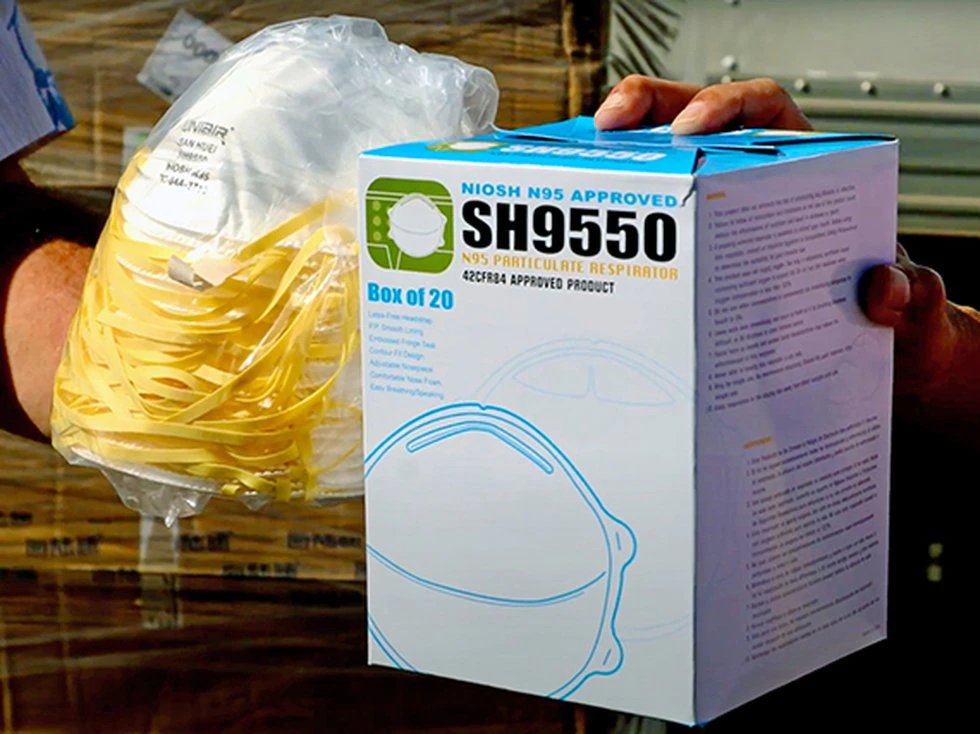
If you do decide to fly, Jackson recommends you wear an N95 mask.
Markus Winkler/Unsplash
University of Auckland epidemiologist Rod Jackson recommends flyers wear N95 masks.
Air New Zealand has suspended its in-flight service so people can wear their masks – which are mandatory on flights, ferries and other forms of public transport – for the duration of their flights. If you do need to take yours off to eat or drink, some researchers suggest waiting until those around you have done so and replaced their face coverings.
It should also be noted that both Air New Zealand and Jetstar require domestic passengers aged 12 and over to provide proof of vaccination or a negative test result. Air New Zealand has made this a requirement since mid-December, and Jetstar introduced it following the announcement that New Zealand would move to the red traffic light setting.
For peace of mind that you are not going to be spreading Covid-19 around the country, you could consider taking a test shortly before you leave and when you arrive at your destination. If you’re meeting up with older, immunocompromised or otherwise vulnerable people at your destination, you could also look into lying low for a few days before joining them.
How can I keep myself safe while travelling?
If you decide to head away, Plank recommends travelling by private transport, packing several high-quality masks such as N95s, and avoiding crowded indoor spaces.
“It’s also worth bearing in mind that additional measures, such as tighter restrictions on gatherings and hospitality, might need to be brought in at short notice.”
Martin De Ruyter/Stuff
Air NZ is advising people to consider buying flexible fares in case they become unwell or have to isolate, an airline spokesperson said.
Multiple Kiwis set to attend events cancelled as a result of Covid-19 have been caught out by Air New Zealand’s new rules on credits. A staggering number of major events have been cancelled across New Zealand because of Covid-19, and more are expected following the country’s move to the red traffic light setting.
Jackson said limiting travel around the country probably doesn’t make a lot of sense when Omicron is everywhere, but he cautioned against travelling if you’re unwell. You must not travel if you are required to self-isolate because of Covid-19, or are awaiting test results.
To best protect yourself while travelling, Jackson recommends ensuring you are fully vaccinated, with a booster if eligible, and avoiding the so-called “Three Cs”. These are places where the virus spreads more easily: crowded spaces, close-contact settings (especially where people have close-range conversations), and confined and enclosed spaces with poor ventilation.
The World Health Organisation urges people to limit their time in such spaces and, when in them, to keep at least a metre away from others or wear a mask if that isn’t possible, to open windows and doors for ventilation, and to keep hands clean and cover coughs and sneezes.
Preparing for travel
The Government’s Covid-19 website advises travellers to make a plan for how to get home to self-isolate if they catch Covid while away. You will only be able to return home if you or someone you’re travelling with are able to drive. You cannot drive home if you need to stay somewhere overnight.
If you have flown or caught a ferry or public transport to your destination, you are likely to have to isolate there. This means you should ensure you have enough money to cover an extended stay.
If you do drive home, make as few stops as possible and only get petrol from a contactless service station.
If you get Covid-19 symptoms while away, you should get tested straight away, not wait until you get home. Call Healthline on 0800 358 5453 for advice and isolate at your accommodation until you get your test result.
RYAN ANDERSON/Stuff
The travel bubble with the Cook Islands remains open.
Can I still travel to the Cook Islands?
The travel bubble between the Cook Islands will remain open despite Omicron circulating in New Zealand.
On Monday, Cook Islands Tourism Corporation general manager Graeme West said quarantine-free travel was “full steam ahead” for now, but he asked visitors to check whether they had been at any locations of interest before travelling.
International travellers must return a negative PCR Covid test before departure, have been in New Zealand for 10 days, and be double vaccinated.
Children under 12 will also need to be double dosed. Vaccinations for 5- to 11-year-olds in New Zealand began on January 17.
You can get travel insurance with Covid-19 cover for trips to the Cook Islands and other international destinations, but it’s important to read the fine print as not everything Covid-related will be provided for.
Most insurers will not cover travellers for Government-mandated restrictions or lockdowns, meaning you could be forced to fork out for an extended stay if this does happen. In this respect, in terms of international travel, it is still very much “flyer beware”.
[ad_2]
Source link