[ad_1]
Children in Queensland won’t need to be regularly tested for COVID-19 when they return to school next Monday.
That’s one of the main points of the government’s back-to-school plan, which covers the first four weeks of the new school year, from February 7 to March 4.
The plan includes new protocols for wearing masks, and what to do if your child becomes ill. Here’s what you need to know.
Does my child need to wear a mask?
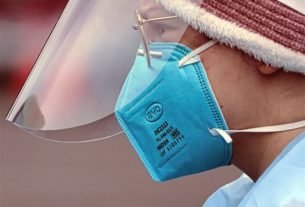
If they’re in high school, yes they do. Masks are also “strongly encouraged” for children in years 3 to six.
Teachers can remove their masks to teach, and children won’t need to wear one when they’re seated.
Masks will be available at school for children who don’t have their own.
Do I need to give my child a rapid antigen test?
Not unless they’re showing symptoms. Unlike New South Wales and Victoria, there’ll be no requirement for parents to regularly test their children.
Regular testing for school children isn’t among the advice issued by the Australian Health Protection Principal Committee (AHPPC) to state and federal governments, Premier Annastacia Palaszczuk said.
“There is no health advice by the Chief Health Officer or by AHPPC that staff or students need regular testing,” she said.
“On top of that, many parents have raised with me concerns about how they would administer these tests to their children. So, I think we’ve reached a good middle point.”
That middle point is that rapid antigen tests will be made available to parents if their children show symptoms.
If parents aren’t comfortable administering the test, they can take their child to a state testing clinic, where they’ll receive priority treatment so they don’t have to queue.
If children are at home and they need a rapid antigen test, Ms Palaszczuk said one will be provided.
The government estimates that about 750,000 tests will be needed over the first four weeks of school, and it’s confident there will be enough supplies.
What if my child becomes sick at school?
If your child starts showing COVID-19 symptoms at school, they’ll be isolated until a parent or guardian arrives to collect them.
Their parents or carer will be given a rapid antigen test to administer at home — or they will be able to take their child to a testing clinic.
If the test is negative, the student can return to school. A positive test will require them to isolate for seven days and follow other guidance from Queensland Health.
If your children shows symptoms outside school, the message is simple.
“If you are sick, stay at home. Don’t go to school,” Ms Palaszczuk said.
“Any positive cases should be reported to the school and Queensland Health.”
Children who are close contacts of positive cases will also need to isolate, in line with the current guidelines.
Independent Education Union Queensland Branch president Terry Burke welcomed the government’s plan but said there needed to be explicit procedures in place about what to do in the event of a positive COVID-19 case.
“It is critical there are explicit procedures for the notification of a COVID-19 positive contact, how parents will be notified, and, how the impact of such a diagnosis of staff or student/s will be managed,” he said.
“Staff should not be placed in the situation of conducting tests with students.”
Will schools close if there’s an outbreak?
Education Minister Grace Grace said closing schools will be a “last resort”.
She added that there’s no one-size-fits-all policy and any action taken will be in response to the size of the outbreak and its potential impact.
The government said all schools have access to carbon dioxide monitors to measure ventilation, and if ventilation issues can’t be solved by opening windows or with air conditioning, air purifiers will be provided.
Will access to schools be restricted?
Yes, schools will aim to limit the number of outsiders allowed within school grounds, though there will be some exceptions for vulnerable and very young children.
For example, parents and carers will be allowed to take their children into kindergartens and facilities offering early-childhood development programs.
And parents with children in prep and year one will be allowed onto school grounds.
For the next four weeks, school camps, excursions, assemblies and other large gatherings will be cancelled or postponed.
What if teachers get sick?
In Queensland, all teachers, staff and volunteers in private and state schools must be fully vaccinated.
Ms Grace said the current vaccination rate among teachers is 98 per cent.
The education department has a “very comprehensive staff management plan in place”, she added.
For example, she said, 5,000 fully vaccinated relief staff were on call to fill gaps where needed.
Mr Burke says it’s important teachers had access to remote work, especially for the medically vulnerable, wage security and access to paid pandemic leave, as well as risk assessment for school activities.
What do I need to do in the next week?
There’s no directive that children must be vaccinated to attend school.
However, health authorities are urging parents of children aged five to 11 to get their first dose before they return to the classroom.
Health Minister Yvette D’Ath also wants more children aged 12 to 15 to get their second dose. As of Sunday, only 67.21 per cent of children in that age group were fully vaccinated.
“If your 12- to 15-year-old is concerned about getting this vaccination, take them to a local pharmacy or to a GP to have that conversation, or go into any one of our vaccination clinics and talk to the staff there,” she said.
Loading form…
[ad_2]
Source link