[ad_1]
Two years into a pandemic that has wreaked havoc in Japan and around the world, some experts believe the endgame may be in sight.
That optimism is largely due to improved treatment options, a high vaccination rate and the milder nature of the omicron variant, which has spurred an unprecedented rise in cases nationwide but has a fatality rate that, if early data holds, may even be roughly on par with influenza.
At the same time, much about the course of the pandemic remains murky, including the potential risk of long COVID-19 and the effectiveness of available treatments against the omicron variant.
What’s clear, however, is the falling death rate when examining data from Tokyo throughout the pandemic. According to Tokyo Metropolitan Government data, the COVID-19 mortality rate in the capital was 5.2% from January to June 2020 before declining to 1.7% in the third wave in December 2020 to March 2021 and 1% in the fourth wave, caused mainly by the alpha variant, in March to June 2021.
In general, people age 60 and over and those who had pre-existing medical conditions make up the majority of serious cases and deaths. In the fifth wave, spurred by the delta variant and lasting from June to September last year, the mortality rate continued its downtrend, falling to 0.3% as vaccines began to reach more of the country, especially the elderly, and treatment options such as antibody cocktails became more widely available.
The significant decline in deaths from COVID-19 is now a hot topic among health experts, with some envisioning a future threat on par with the seasonal flu. Worldwide, there are roughly 1 billion cases of influenza every year, including 3 to 5 million serious cases and 290,000 to 650,000 deaths, according to the World Health Organization. That’s a mortality rate of 0.029% to 0.065%.
Amid the sixth and largest wave of the pandemic, which started late last month and was brought about by the omicron variant, the fatality rate in Tokyo has fallen even further, to about 0.02% in recent days, according to calculations by Taisuke Nakata and other researchers at the University of Tokyo. Nakata, an associate professor at the Graduate School of Economics, says there is a risk of underestimating the death rate when new cases are still rising at a rapid rate, as it takes more time for deaths to be reflected in the data. But he added that the rate of serious illness in the sixth wave is likely to be down significantly from the previous waves of the pandemic.

Studies have shown that the omicron variant multiplies much faster in the bronchi than other variants but does not readily multiply in lung tissues, which scientists have said is partially why it doesn’t pose as much danger as delta and other variants.
Still, experts say omicron should not be underestimated because the sheer number of cases may still overwhelm health care systems. The variant’s transmissibility is considered close to that of measles, the most infectious disease in humans and a disease with which one sick person can infect 12 to 18 others, according to the U.S. Centers for Disease Control and Prevention (CDC). Some clinics in Japan are already overwhelmed with a surge in patients seeking to be screened for COVID-19.
Across the country, hospitalized patients with serious symptoms totaled 685 last week, government data show. That compares with 3,030 seriously ill patients at the delta wave’s peak in September.
Despite the current spike in omicron cases nationwide, the stark decline in serious illnesses and deaths suggests that the pandemic may soon transition to an “endemic” stage under which infections spread regularly like a flu but do not lead to many hospitalizations or deaths, says immunology expert Takuya Tamatani, a part-time lecturer at Juntendo University’s School of Medicine.
“The severity and mortality rates have become similar to those of influenza, or in the case of mortality rate, it’s even lower than that of influenza,” he says. “If we assume that Japan is in the middle of the sixth wave, then the seventh and subsequent waves will probably shift to an endemic stage. The next wave will probably be in May and June, so I think we will be in an endemic phase from around that time.”
The WHO has cautioned against an overly optimistic viewpoint, saying the world needs to be braced for the possibility that the coronavirus is here to stay. But some officials with the global health body are also talking about the endemic stage of the virus. WHO Regional Director for Europe Hans Kluge said Sunday that Europe may be heading toward the pandemic’s “endgame.” Tedros Adhanom Ghebreyesus, the head of the body, cautioned against that view the next day, however, calling it “dangerous” to assume omicron represents the endgame.
Like other viruses in the coronavirus family, the virus that causes COVID-19 led to much more severe symptoms in the first year of its existence but has attenuated since then in order to survive, experts say. A lower death rate may give the virus a better chance of infecting more hosts.
“The virus tends to increase its infectiousness while trying not to kill the host as much as possible,” Tamatani says. “That’s the pattern the virus is supposed to undergo in nature, and omicron seems to be the very variant that was born this way.”
The case fatality rate in Japan is one of the lowest in the world, but a low rate of less than 0.1% for omicron has also been reported in Canada. Experts, however, say the rate does not represent the true risk as the total number of cases remains unknown in reality.
The vast majority of omicron cases lead to asymptomatic or mild symptoms in Japan, as has been observed overseas. Rochelle Walensky, director of the U.S. CDC, said earlier this month that when compared to the delta variant, infections with omicron were associated with a 74% reduction in intensive care admissions and a 91% decline in the mortality rate.

According to Nakata’s team, the rate of severe illness, which is defined by the capital as being when a patient needs an artificial respirator or extracorporeal membrane oxygenation (ECMO) machine, has been hovering at around 0.03% in Tokyo during the sixth wave, a fraction of the 0.66% rate seen during the delta-caused fifth wave last summer.
The Tokyo Metropolitan Government publishes official data on the risks of serious illness and death from the coronavirus every few months. But, given the need to sustain socioeconomic activities, Nakata and his team have been publishing daily estimated rates during the sixth wave to provide a more real-time estimate for policymakers to consider when implementing COVID-19 measures. The researchers take a person’s average hospital stay into account, and Nakata says the figures can help predict the number of seriously ill patients and the stress on the health care system in the future.
At the height of the fifth wave, the daily number of new infections exceeded 25,000, putting a heavy burden on hospitals as the death toll approached 90 per day.
Nakata says if the risk of severe illness for omicron cases is determined to be one-fourth that of the delta-dominated fifth wave, then the health care system would be able to manage four times as many infections in the latest wave.
“In considering the coronavirus strategy for the medium to long term, I think it’s important to monitor the risk of severe disease and death,” he says.
The omicron variant, which is now suspected to account for 97% of all new cases nationwide, spurred Japan’s record daily infections past 78,000 on Thursday. Tokyo also posted a record of over 16,000 cases, with the hospital bed occupancy rate quickly rising to 44.4%. With an overwhelming number of new cases, public health centers are also finding themselves under enormous strain as they track the health of infected individuals isolating at home and identify those who came in close contact with COVID-19 patients, among other duties.
Against that backdrop, there are mounting calls on the government to downgrade COVID-19’s classification in order to ease the burden on public health centers and potentially save more lives by speeding up treatment for patients isolating at home who see a sudden deterioration in their health.
The debate over whether to downgrade the disease — which is currently classified alongside some of the most serious infectious diseases — to a less-threatening Class V disease and in the same category as influenza, has been gaining particular traction recently as people from many circles, including Tokyo Gov. Yuriko Koike, insist the time is ripe to discuss the issue. Prime Minister Fumio Kishida, however, has said he’s not going to make the change anytime soon as infection numbers are still on the rise.
In Japan, infectious diseases are placed into one of eight classifications: Class I through Class V and three others for diseases that have the potential to affect the lives of people because of their high transmissibility: novel influenza infectious diseases, designated infectious diseases and new infectious diseases. Class I diseases, such as Ebola, are considered the most dangerous. Class II includes tuberculosis.
Currently, COVID-19 is legally classified as a “novel influenza infectious disease,” entailing some countermeasures that are equivalent to those for Classes I and II. The proposed change to a Class V disease would not mean that the coronavirus has become less threatening, but the revision would allow suspected patients to get treatment at any hospital using health insurance at their own cost, rather than having all the medical fees paid through taxes.

Adding to the discussions is the outlook for the current sixth wave in the country, which some experts say could crest as soon as early February. But some computer simulations have shown that daily new cases in Tokyo are projected to reach 200,000 or even exceed 400,000 by early March depending on the speed of the spread of the omicron variant.
“I’m definitely for making the change in classification,” Tamatani says. “The reason for a peak out in Europe and the U.S. is not because the booster vaccination rate is high. No matter what the vaccination rate, the availability of drugs or the nations’ anti-infection measures are, the peak out occurs irrespective of these factors.
“Because Japan started seeing an increase from the beginning of the year, we would likely see a decline starting in around early February. What happens after that is unclear, but I don’t think that omicron would be replaced by a new variant that would lead to a high possibility of causing a severe illness. If that’s the case, the death rate from COVID-19 will likely be equivalent to that of a common cold.”
Regardless of whether the revision in classification is made soon, Tamatani says the government should take another look at strategies for controlling the spread of infections. The government’s quasi-emergency measures, now imposed in 34 prefectures, are unlikely to be effective in preventing cluster infections at schools, which have been on the rise recently. The quasi-emergency measures, which empower governors to request that restaurants shorten business hours, are also garnering criticism from some pubs that rely on late-night revenues.
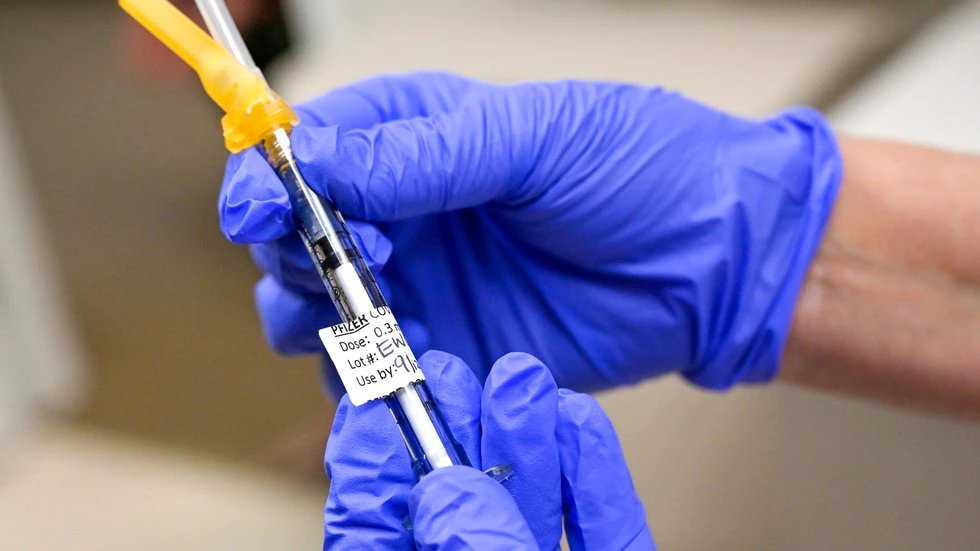
Another key aspect is the role of COVID-19 vaccines, which he says is the best weapon against the pandemic. Shots by Pfizer-BioNTech and Moderna — which accounted for a large majority of the shots administered in Japan’s initial rollout — are highly effective in protecting against severe symptoms and death, but getting a booster shot, which the CDC says provides 90% protection against omicron-related hospitalization, will be crucial, he said.
Lastly, how the nation as a whole deals with the pandemic is a crucial factor to consider, Tamatani says. For example, in the face of the omicron surge, the government has extended its strict border controls that bar new entries by nonresident foreign nationals, in principle, until the end of February — a policy that has invited stiff criticism from affected students and businesspeople.
Another controversial measure is the requirement for close contacts of infected individuals to isolate and refrain from unnecessary outings for 10 days, though the government is considering shortening the period to a week.
Tamatani says Japan is walking a fine line by not sticking to either “COVID zero” or a strategy based on living with the virus, as the more measures the government takes, the higher the Cabinet approval ratings tend to go.
“Japan should pursue a strategy to live with the virus just like the U.S. and Europe,” he says. “In the initial phase of the pandemic with the virulent coronavirus, where the mortality rate was close to 10%, living with COVID was impossible, but now that the rate of serious illness and death have come down this much, we could theoretically respond with a ‘living with COVID’ strategy.
“Another reason is that Taiwan and South Korea, which initially had success with zero COVID, nonetheless, were hit by the pandemic,” he says. “Keeping out infections is now cited as a possible reason behind that. So unless we gain immunity as a whole, zero COVID is probably something that cannot last forever, as we’ve seen a rise in cases in China.”
In a time of both misinformation and too much information, quality journalism is more crucial than ever.
By subscribing, you can help us get the story right.
[ad_2]
Source link